

I didn't always know

Some people say getting their autism diagnosis feels anti climactic - that they always knew. Well, I didnt always know. I went to school in the 70’s and 80’s, so for my entire childhood, I don’t think I heard the word autistic once. We were always there, of course, but we were either the kind of autistic that made us just the weird kid who didn’t fit in, or we were the kind of autistic that got us spirited away to somewhere behind a locked door.
So I didn’t always know. I always knew there was something different about me, but I didn’t know what it was. I only knew that there were things that most people found easy, that I found difficult, and that felt embarassing. As I moved into adulthood, I learned - mostly subconciously - to pretend to be as much like everyone else as I could. Hard to even begin to know yourself when you’re too busy doing an impression of what you think other people want.
So for me, getting my diagnosis in my 50’s wasn’t anti-climactic. It was climactic. It was fucking seismic, and as I sit here and write this, two and a half years on from that day, it hasn’t got any less impactful. In fact if I’m being honest, it’s maybe getting harder. I’m struggling a bit with it - and if I am, then maybe you are too - so lets talk about it.
When I got my diagnosis, I thought it would be the first step in a short journey to everything being less painful. I thought that reason would rationalise the hurt, and lessen it. Don’t get me wrong - I’m very glad that I got diagnosed. I’m glad that all the hundreds of thousands of times in my life when I behaved oddly, when I didn’t understand something, or someone, when I felt like the rest of the world was speaking a slightly different language - all of those awful - and very vivid - memories could now be gathered under one heading. They were all the same thing. That helps, hugely. But just because you know exactly which bone in your leg is broken, it doesn stop it hurting.
I still find myself at three in the morning, eyes wide open when I should be asleep, getting full body shivers from the feelings of shame and embarassment at moments of bad behaviour. Moments that I now know were down to having all my autistic triggers triggered, being overwhelmed, and going into uncontrollable meltdown. But to the people around me, I was just being an asshole, and thats the sense memory that remains strongest.
So - here’s where I am now.
I have new knowledge. I finally have the instruction manual to my brain, and it’s a slightly different model to most. And I’m really grateful to know that. Careful reading of the manual, and showing it to the important people in my life, will make things a little easier going forward.
But at the same time, I’m grieving for the young me, whose oddness was compounded by his panicky confusion about why he was like this. If he’d got the help, as a child, that I just got in my 50’s, then I’m willing to bet that a lot of those excruciating moments that play on a loop in my head, wouldnt have happened. This makes me sad and angry.
Some people wonder what the point of getting a diagnosis is, when, as they say, “Nothing has really changed”. It’s true that nothing, physically, has changed. They didn’t heal my broken leg, they didnt give me a pill to make me fit in better. Nothing has changed, but everything has changed. I am different now.
You know how in a movie, when someone’s been in an accident and wakes up in hospital, and they starts feverishly asking “Where am I? how did I get here? am I going to be ok?”
It’s like that, maybe. It doesn’t change my situation, my injuries, it doesn’t change what happened - but it makes it a good deal less terrifying to know where you are and how you got here.
But like I said, I’m still struggling with it. Being diagnosed is the end of one journey, but the start of a much bigger one. Knowing why I’m like this - having a word that names it - means I can learn as much as possible about it - about myself - and hopefully make the rest of my life a little bit less painful for myself and those around me. Diagnosis isn’t treasure - but it’s a map.
My worry about ways I’ve behaved in the past has been augmented by thinking that people close to me will get sick and tired of everything being about my autism. I get flashbacks to when I was a teenage vegetarian and my dad would lose it at how I was being difficult and making everything about me. I’m still a vegetarian, by the way.
But the thing is, pretty much everything is about my autism - my brain works in a different way to most peoples brains, and my brain is in charge of the rest of me, so...
It is fascinating, though, to be discovering that so many of - to quote the wonderful writer Linda Holmes - my little weirdsies - are part of, or associated with neurodivergence. My epilepsy? Tick. Depression? Yup. Dyspraxia? Uhhuh. OCD? Certainly. Anxiety? You betcha. Insomnia? Of course. Migraines? Yes!
Anyway. Sorry if this little train of thought has been a bit of a downer. I’m generally doing ok. Its just not always easy and I wanted to write something for all the people that are having a hard time processing their differences - whatever your differences are - and say that, yeah, it can be an uphill journey, and it can be tiring, but the view going up that hill is better than the one in that cave.

I was going through an old hard drive this week, and found some photos from a trip to Hong Kong I took a few years ago. Thought I’d repost my favourites here.


And here’s a couple more things that my camera saw this week.


Hope you like!
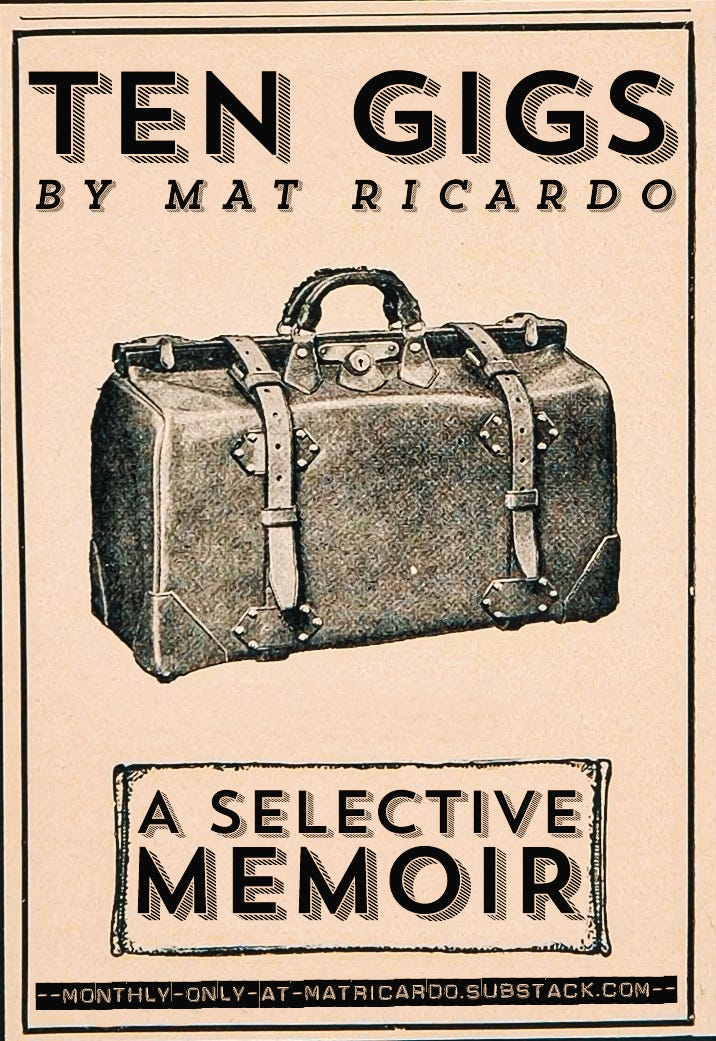
While you’re here - I’ve started a side-project - I’m writing a whole book, chapter by chapter, here on Substack. TEN GIGS is a selective memoir. My life in ten gigs, one per chapter, one chapter per month. It’s a big undertaking, so it’s available for paid subscribers only. I’ve set the fees literally as low as it is possible to set them, so I really hope you consider signing up. The introduction chapter is up now, for free, to give you a taste of what’s to come.
Hope you’re doing ok.